
Introduction
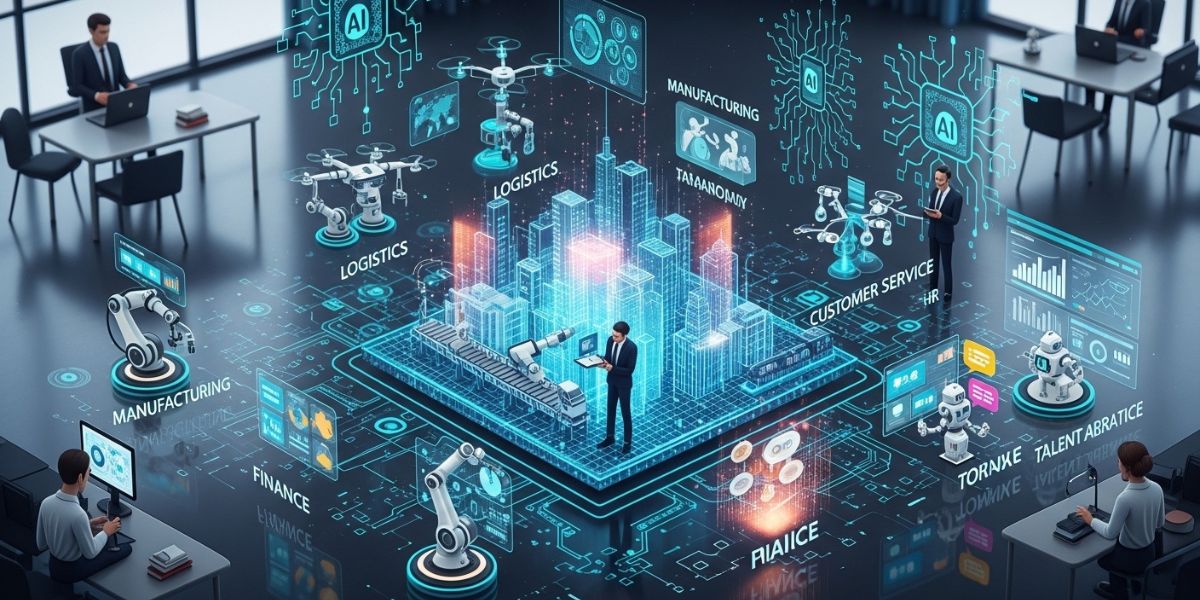
Artificial Intelligence (AI) is no longer a futuristic concept — it is a powerful business tool transforming how companies operate, compete, and grow. From automation and data analysis to customer service and marketing, AI is reshaping business operations across industries. Companies that adopt AI-driven solutions gain higher efficiency, reduced costs, improved accuracy, and better decision-making capabilities.
1. AI-Powered Automation and Process Optimization
One of the biggest advantages of artificial intelligence in business operations is automation. AI automation helps companies streamline repetitive tasks such as data entry, inventory tracking, billing, and reporting.
Using machine learning algorithms, businesses can automate workflows, reduce human errors, and increase operational efficiency. Robotic Process Automation (RPA) combined with AI enables faster turnaround times and improved productivity.
2. Smarter Decision-Making with AI Analytics
AI-powered data analytics allows businesses to analyze large volumes of data in real time. Advanced tools like predictive analytics and business intelligence systems help organizations make data-driven decisions.
With AI-driven insights, companies can forecast demand, identify customer behavior patterns, and optimize pricing strategies. This leads to improved strategic planning and higher profitability.
3. Enhancing Customer Experience with AI
Customer experience is a key factor in business success. AI technologies like chatbots, virtual assistants, and recommendation engines help companies deliver personalized services.
For example, AI chatbots provide 24/7 customer support, while recommendation systems suggest products based on customer preferences. This improves customer satisfaction, increases engagement, and boosts conversion rates.
4. AI in Marketing and Sales Optimization
AI is transforming digital marketing and sales operations through automation and targeting precision. AI tools analyze customer data to create personalized marketing campaigns, improve lead generation, and optimize ad performance.
AI-driven SEO tools help businesses rank higher on search engines by analyzing keywords, search trends, and competitor strategies. Sales teams use AI-powered CRM systems to predict buying behavior and close deals faster.
5. Cost Reduction and Risk Management
Artificial intelligence reduces operational costs by minimizing manual work and improving accuracy. AI systems can detect fraud, monitor cybersecurity threats, and manage supply chain risks effectively.
By implementing AI solutions, businesses can reduce financial risks, improve compliance, and ensure secure operations.
6. AI and Future Business Growth
In the future, AI will become a core part of business strategy. Companies leveraging artificial intelligence solutions, AI software development, and cloud-based AI platforms will gain a competitive advantage.
AI innovation drives faster product development, smarter operations, and scalable growth. Businesses that integrate AI technology today will be better prepared for tomorrow’s competitive market.
Conclusion
Artificial Intelligence is transforming business operations by improving automation, enhancing customer experience, enabling data-driven decisions, and reducing costs. As AI technology continues to evolve, companies that adopt AI-powered systems will experience higher productivity, stronger customer relationships, and sustainable growth.
The future of business operations is intelligent, automated, and data-driven — and AI is leading the transformation.
Frequently Asked Questions (FAQ)
What is Artificial Intelligence in business operations?
Artificial Intelligence in business operations refers to the use of AI technologies such as machine learning, automation, and data analytics to improve efficiency, decision-making, customer experience, and overall productivity.
How does AI improve operational efficiency?
AI improves operational efficiency by automating repetitive tasks, reducing manual errors, speeding up workflows, and optimizing business processes through intelligent automation and real-time data analysis.
Can small businesses benefit from AI?
Yes, small businesses can benefit greatly from AI by using affordable AI tools for marketing automation, customer support chatbots, data analytics, and process optimization without heavy infrastructure costs.
What are the most common AI applications in business?
Common AI applications include AI chatbots for customer service, predictive analytics for forecasting, AI-powered CRM systems, marketing automation, fraud detection, and supply chain optimization.
How does AI help in decision-making?
AI helps in decision-making by analyzing large data sets, identifying patterns, predicting trends, and providing actionable insights that enable data-driven and strategic business decisions.
Is AI replacing human jobs in businesses?
AI is not completely replacing human jobs; instead, it automates repetitive tasks and supports employees by enhancing productivity, allowing humans to focus on creative, strategic, and decision-oriented roles.
How does AI improve customer experience?
AI improves customer experience through personalization, 24/7 AI chatbots, faster responses, intelligent recommendations, and predictive customer behavior analysis.
What is the future of AI in business operations?
The future of AI in business operations includes smarter automation, advanced predictive analytics, deeper personalization, improved cybersecurity, and fully integrated AI-driven business ecosystems.
Is AI implementation expensive for businesses?
AI implementation can be cost-effective as many cloud-based AI tools and platforms offer scalable solutions. In the long run, AI helps reduce operational costs and increases ROI.
Why should businesses adopt AI now?
Businesses should adopt AI now to stay competitive, improve efficiency, enhance customer satisfaction, reduce costs, and prepare for the future of intelligent and automated business operations.
Disclaimer : This article is for informational purposes only and does not constitute professional business or financial advice. Businesses should evaluate their specific needs before implementing any AI solutions.
